Beyond the Canvas: The Transformative Impact of Art Education on Students


When we talk about the impact of art education, it is tempting to measure it in the obvious ways: a finished painting, a polished performance, a portfolio piece. But the real transformation happens somewhere less visible, in how students come to see themselves, how they relate to others, and how they carry themselves through challenges long after they have put down the paintbrush.
Reshaping Self-Identity
For many students, art class is one of the few places where they get to define success on their own terms. There is no single correct answer, no universal rubric for "good." That shift changes something fundamental in how students see themselves, not just as people who follow instructions well, but as people who have something original to say.
This matters enormously for students who don't naturally excel in more standardized academic settings. Art gives them a legitimate, celebrated space to succeed, often for the first time, reshaping their sense of what they are capable of.
Building Confidence Through Vulnerability
Creating art is an inherently vulnerable act. Sharing a drawing, a poem, or a performance means putting a piece of yourself in front of others and risking judgment. Students who practice this repeatedly, in a supportive classroom environment, build a rare and valuable kind of confidence: the willingness to be seen, even when the outcome is uncertain.
This is not confidence built on always getting things right. It is confidence built on the experience of surviving imperfection, revising, and showing up again. That kind of resilience carries directly into how students handle setbacks in other parts of their lives.
Developing Empathy Through Creative Expression
Art asks students to step outside their own perspective, to portray a character, interpret someone else's experience, or imagine a viewpoint different from their own. This practice quietly builds empathy. Students who regularly engage with art tend to become more attuned to nuance, more comfortable holding multiple perspectives at once, and more thoughtful about how their choices affect the people around them.
In a world that often rewards quick judgments and simple narratives, this capacity for empathy and nuance is a genuinely transformative skill.
Strengthening Community and Belonging
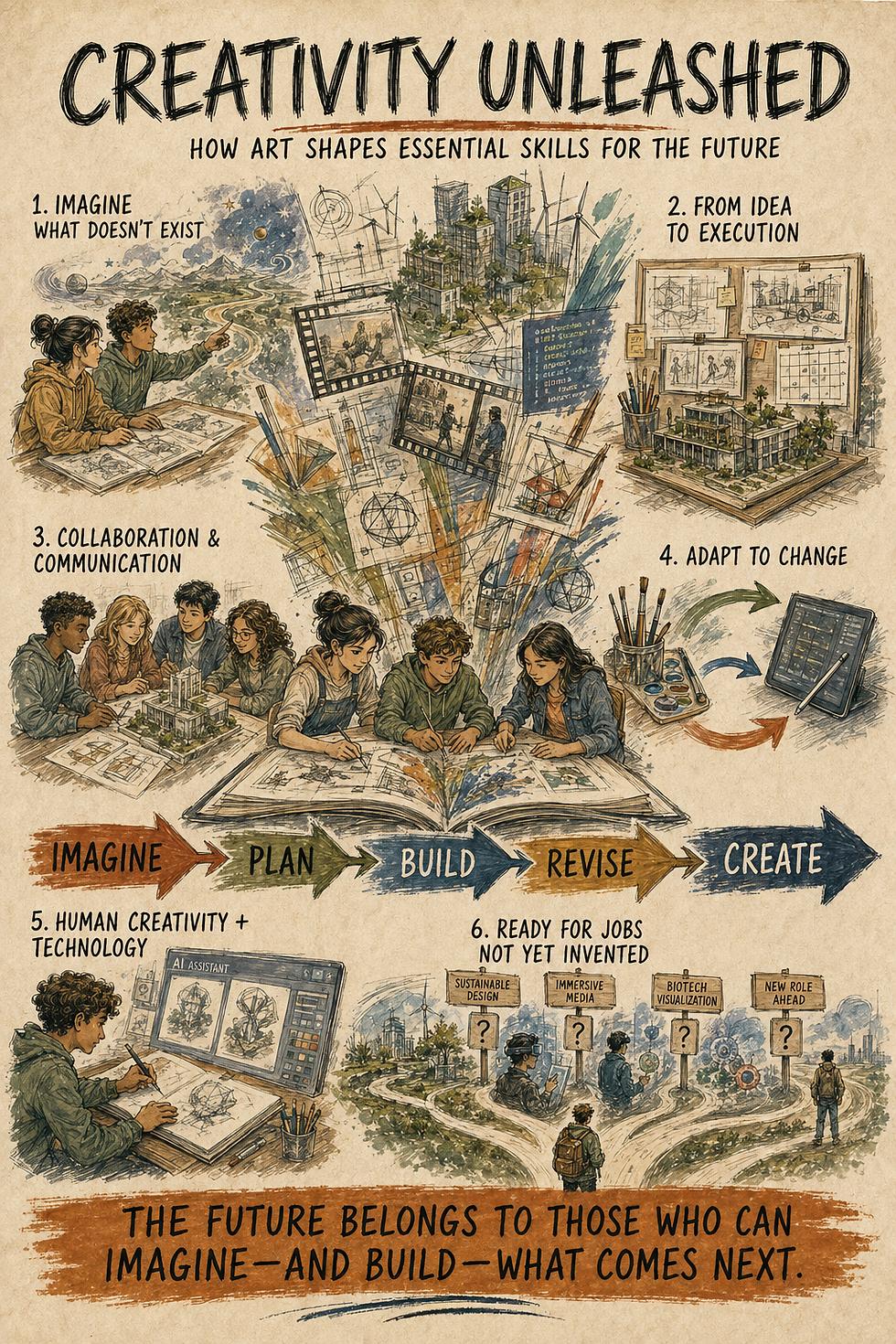
Art is rarely created in total isolation, even when the work itself is personal. Group critiques, ensemble performances, and collaborative murals all build a sense of shared purpose. Students learn that their individual voice matters more, not less, when it exists alongside others'. This sense of belonging can be especially powerful for students who feel disconnected from other parts of school life.
A Lasting Imprint Beyond Graduation
The transformation art education offers does not end when a student leaves the classroom. Adults who had meaningful art education as children often carry forward a distinct comfort with ambiguity, a willingness to take creative risks, and a habit of self-expression that shows up in how they solve problems, communicate, and even cope with stress. It is an imprint that outlasts any specific skill or technique learned along the way.
Conclusion
The true impact of art education was never really about the canvas, the clay, or the sheet music. Those are simply the tools. What art education transforms is something deeper, how students understand themselves, relate to others, and move through the world with resilience and empathy. That transformation is quiet, cumulative, and far more lasting than any single finished piece could ever show.


Comments